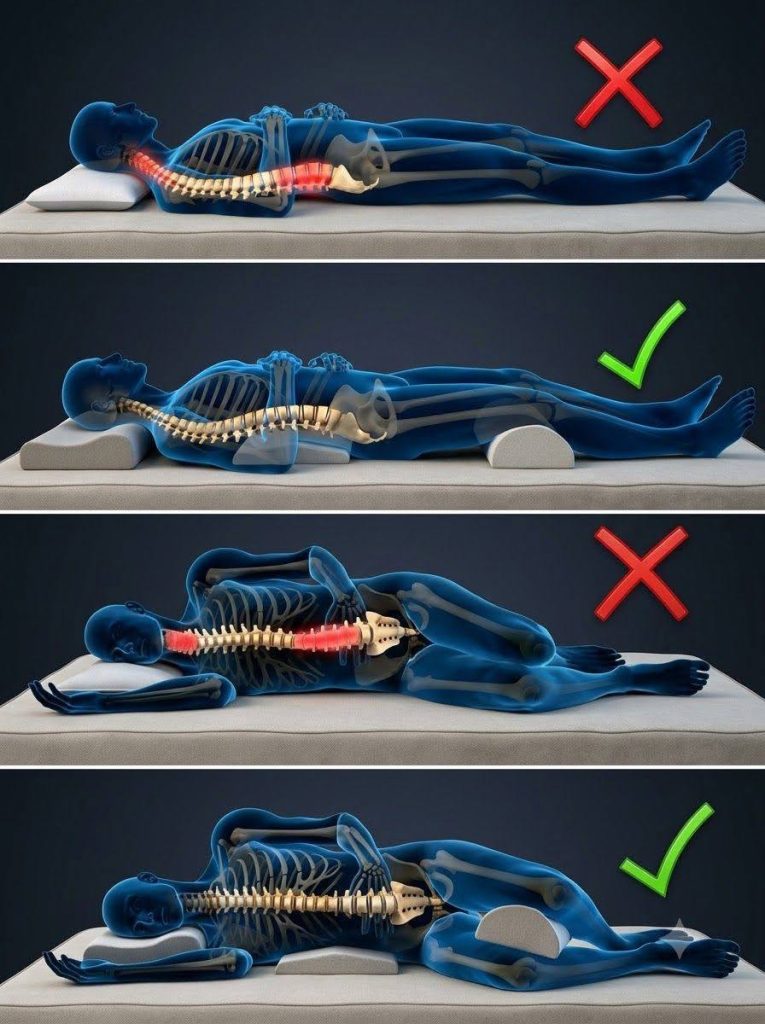
there is an important exception
Sleeping on your back may not be the best choice for people with obstructive sleep apnea or significant snoring.
When a person sleeps on their back, the tongue and soft tissues at the back of the throat can move backward and contribute to airway narrowing. This can make breathing interruptions more common in some people with obstructive sleep apnea.A better approach
If you regularly:
Snore loudly
Wake up gasping or choking
Stop breathing during sleep according to a partner
Wake up with headaches
Feel extremely sleepy during the day